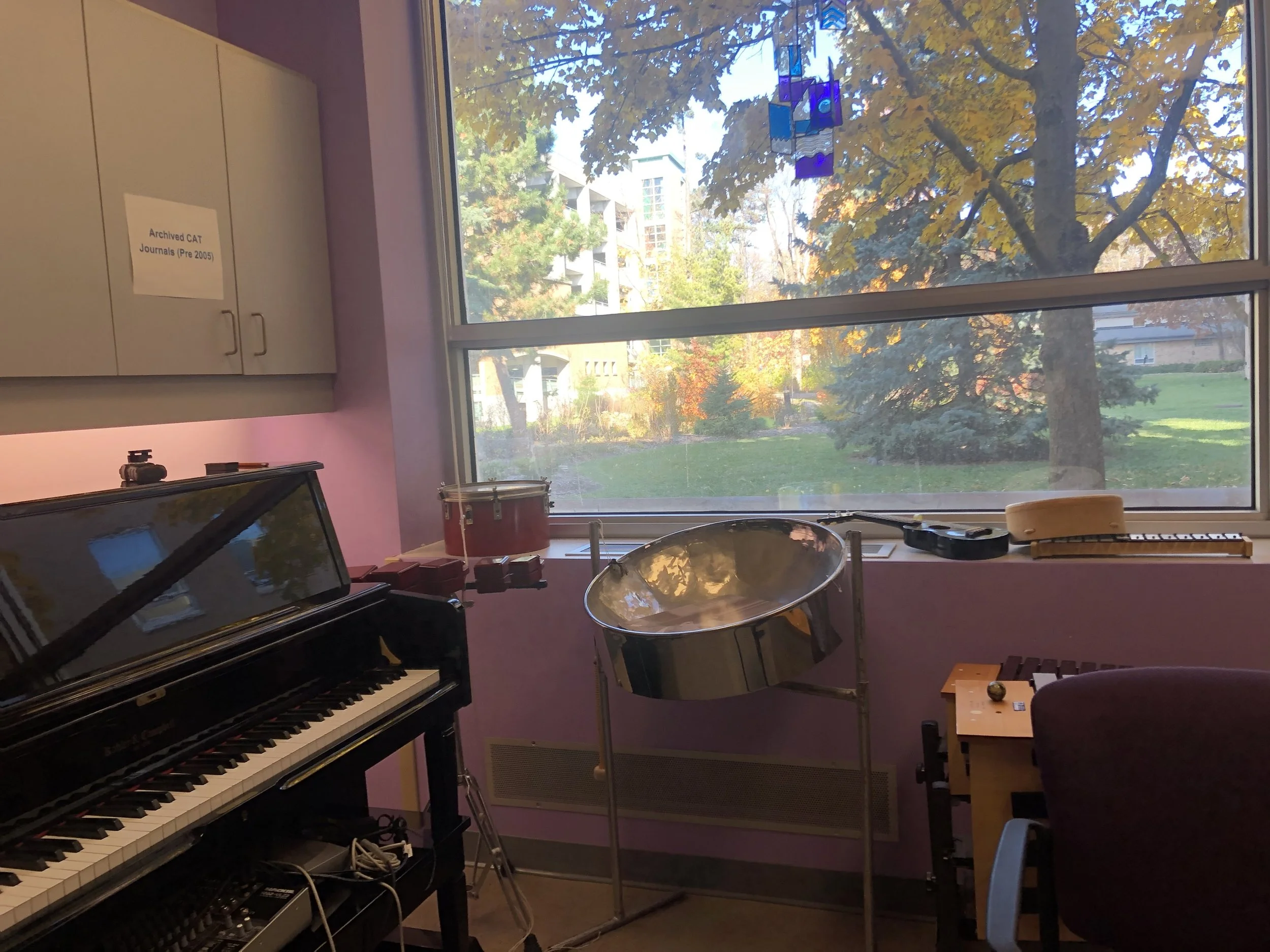
Composing Care: Aesthetics and Affect in the Clinic
Composing Care (monograph in preparation) asks how forms of care come to matter and how they register—or fail to register—as clinical care. Drawing on two years of multi-sited clinical ethnography in hospitals and their affiliated long-term care settings in Canada and the United States, this book follows music therapists working at the margins of biomedicine as they transpose musical acts (playing, listening, improvising, songwriting) into clinical care. This work includes making ephemeral encounters perceptible as clinical treatment—from charting to collaborating with interdisciplinary care teams. Their efforts are informed by longer histories in which clinical authority and scientific evidence are entangled with colonial, racialized, and gendered assumptions that constrain what can be taken seriously as therapeutic intervention.
Composing Care asks: what happens when therapeutic efficacy and evidence do not produce clinical recognition of care? Interventions do not become clinical simply because they work, but because they are perceived and understood as such within normative frameworks of evaluation. Moments that exceed these frameworks continue to matter as care, not only for what they do therapeutically but for how they register relationally, offering forms of recognition otherwise for patients at the margins of clinical and social life. Composing Care develops the aesthetics of care as an analytic that attends to both how care is experienced and made intelligible. It shows how affective intensities register care through felt immediacies and relations, while aesthetic arrangements organize what can be perceived, valued, and recognized as clinical in the first place. Clinical care unfolds through tensions between commensurability and dissensus, as practitioners align their work with clinical logics while simultaneously enacting forms of care that exceed them—indeterminate moments that do not make sense within normative aesthetic regimes. These moments disrupt expectations of intelligibility, unsettle hierarchies of value, and reconfigure what counts as care. By foregrounding these dynamics, Composing Care shows that care is not simply delivered through interventions but composed through aesthetic and affective processes that are unevenly recognized and valued within clinical settings. In doing so, the book offers a new account of how clinical worlds are in the making and identifies both the possibilities and constraints for reimagining clinical life.
Related publications
-
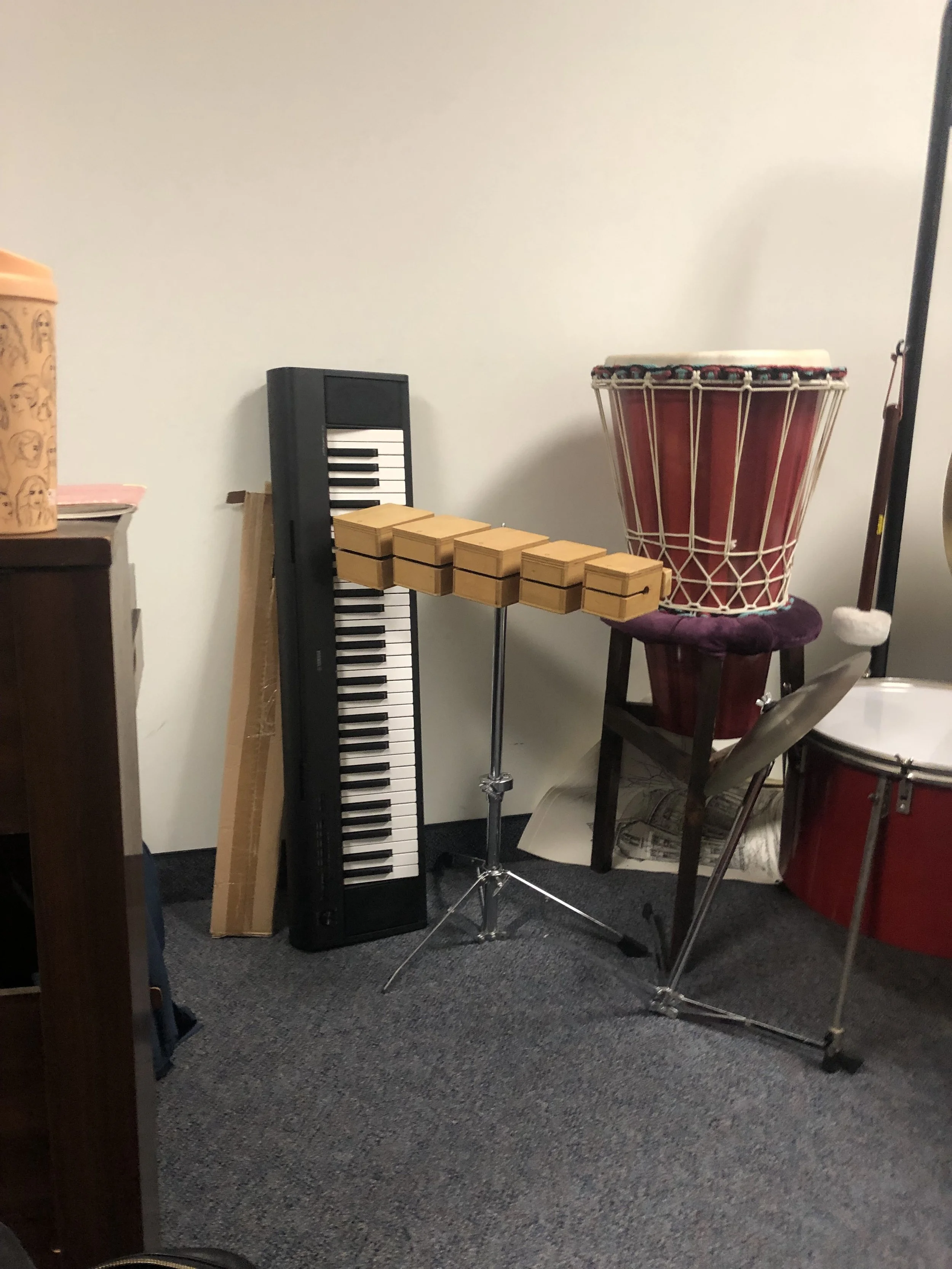
Evans, Meredith. 2026. “Making care audible: Musical gifts and affective reciprocity in the clinic.” Feminist Anthropology.
-

"Music Therapy as Clinical Care: An Anthropological Lens." 2025. Guest on Beyond the Studio: The Canadian Music Therapy Podcast,
-

Evans, Meredith. 2023. "The pursuit of clinical recognition: Aesthetics, care, and music therapy in North American hospitals.” Medical Anthropology Quarterly. 1–15.
-

Evans, Meredith, Priya Shah, Chrissy Pearson, Dany Bouchard, & Tom Curry. 2022. “Providing Music Therapy on Inpatient Mental Health Units in Canada: Reflections on Practice During the COVID-19 Pandemic.” Canadian J of Music Therapy. 28(1):44-56.
-

Evans, Meredith, and Andrés Romero. 2021. “KİRAİÑİA (Long Flutes).” Visual and New Media Review, SCA Fieldsights.
-

Romero, Andrés, and Meredith Evans. 2021 “Rehavi (Timekeepers).” Visual and New Media Review, SCA Fieldsights.
-

Van Dyk, Janita, Meredith Evans, Andrés Romero, Juliana Friend, and Melissa Lefkowitz. 2021. “The Writing Group: In a Room Alone, Working Together.” Members Voices, SCA Fieldsights.
-

Evans, Meredith. 2020. “Becoming Sensor in the Planthroposcene: An Interview with Natasha Myers.” Visual and New Media Review, SCA Fieldsights.
-

Evans, Meredith, and Janita Van Dyk. 2020. “Drawing Care with Jean Hunleth.” Supplementals, SCA Fieldsights.
-

Evans, Meredith. 2019. “Refusal and Resurgence: A Review of Wolastoqiyik Lintuwakonawa.” Visual and New Media Review, SCA Fieldsights.
-

Evans, Meredith, and Nadine Ryan. 2019. “(De)compositions: A Review of Anthropocene.” Visual and New Media Review, SCA Fieldsights.